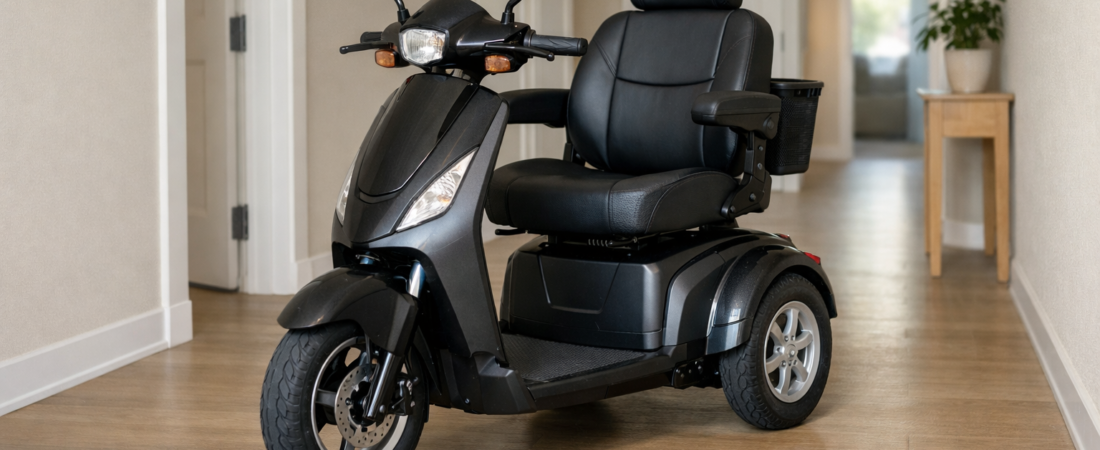
Choosing between a 3-wheel and a 4-wheel mobility scooter is one of the first decisions many people face when researching mobility options. Both designs can support independence and daily movement, but they behave quite differently in real-world use.
This guide explains the practical differences in stability, turning ability, comfort, and everyday suitability—so you can decide which layout better fits your home, lifestyle, and confidence level.
The Basic Difference Between 3-Wheel and 4-Wheel Scooters
The difference is straightforward:
3-wheel mobility scooters have:
-
One wheel at the front
-
Two wheels at the rear
4-wheel mobility scooters have:
-
Two wheels at the front
-
Two wheels at the rear
That single design choice affects how the scooter turns, how stable it feels, and where it performs best.
Turning and Manoeuvrability Indoors
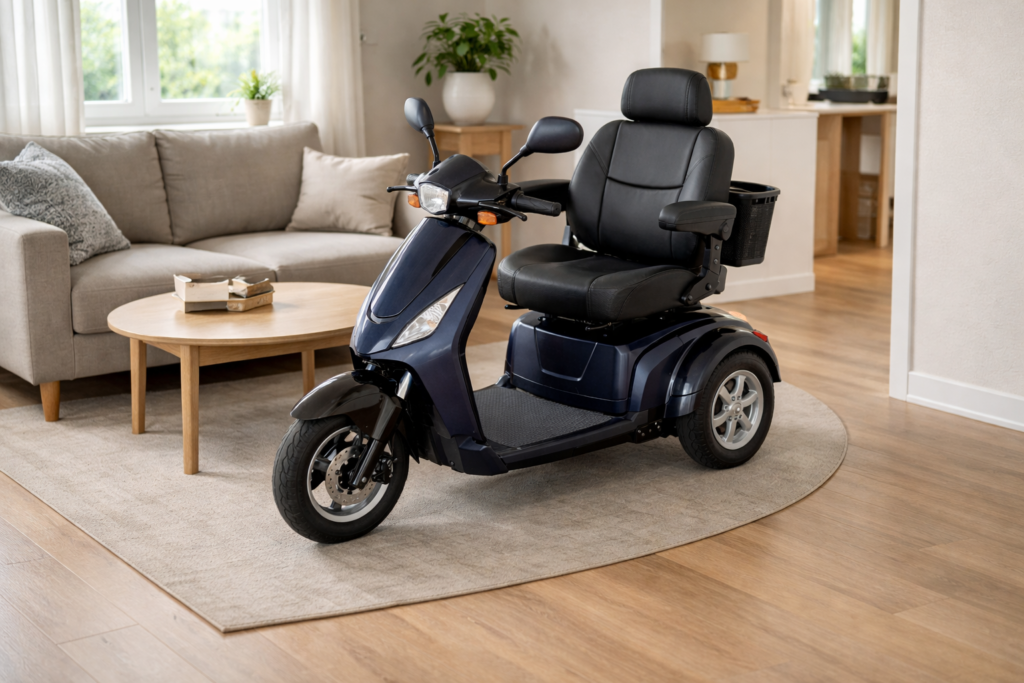
One of the biggest advantages of a 3-wheel scooter is its tighter turning radius.
Because there is only one front wheel, the scooter can pivot more sharply. This can make a noticeable difference when:
-
Navigating narrow hallways
-
Turning through doorways
-
Moving around furniture
-
Using compact bathrooms or kitchens
For people living in apartments or smaller homes, this increased manoeuvrability can make indoor movement feel easier and less stressful.
4-wheel scooters usually need a little more space to turn. While many modern models are still designed for indoor use, they generally feel less agile in very tight areas.
Stability and Confidence on Uneven Surfaces
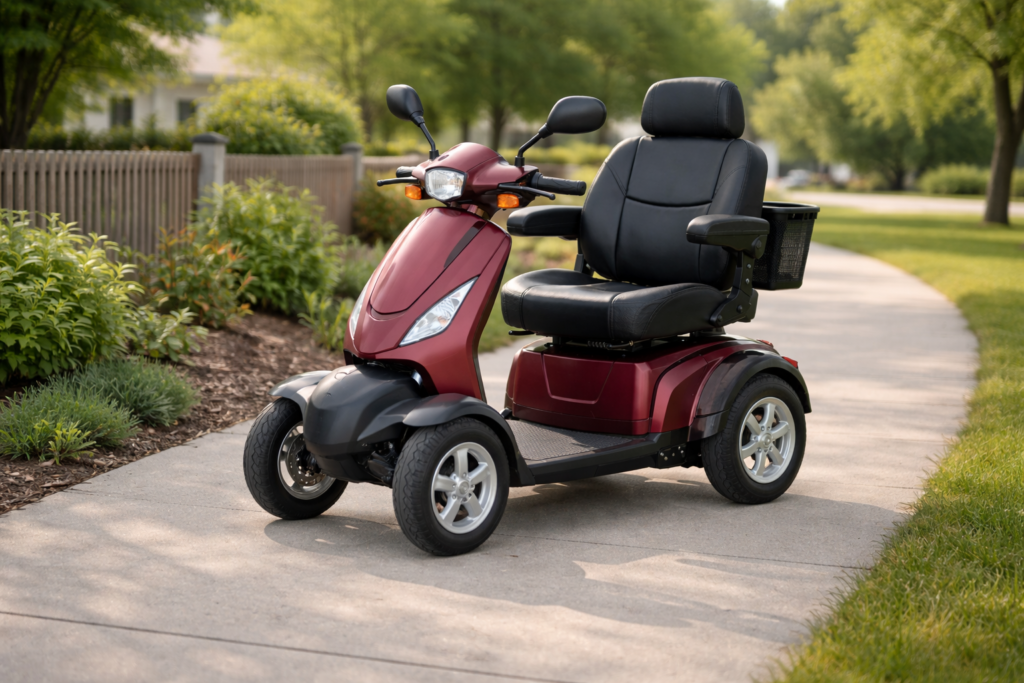
Stability is where 4-wheel scooters tend to stand out.
With two wheels at the front, 4-wheel scooters:
-
Feel more planted on uneven ground
-
Handle small bumps and surface changes more confidently
-
Are less likely to feel “tippy” when turning outdoors
This extra stability can be reassuring for people who:
-
Have balance concerns
-
Feel unsteady when leaning or turning
-
Spend time outdoors on footpaths, driveways, or community areas
3-wheel scooters are stable when used appropriately, but they can feel less secure on uneven or sloped surfaces, particularly at higher speeds or when turning sharply.
Indoor vs Outdoor Use Considerations
Where you plan to use the scooter most often matters more than the number of wheels alone.
3-wheel scooters are often better suited to:
-
Primarily indoor use
-
Smooth, flat surfaces
-
Short trips inside buildings
-
Tight living spaces
4-wheel scooters are often better suited to:
-
Outdoor footpaths and pavements
-
Mixed indoor and outdoor use
-
Slightly uneven terrain
-
Longer daily distances
If most of your movement happens outdoors, the added stability of four wheels usually outweighs the slightly larger turning circle.
Comfort, Seating, and Ride Feel
Wheel configuration also affects how the scooter feels to ride.
4-wheel scooters generally:
-
Distribute weight more evenly
-
Feel smoother over small surface changes
-
Provide a more secure seated experience
3-wheel scooters often:
-
Feel lighter and more responsive
-
Are easier to steer in confined spaces
-
Can feel less stable during sharp turns outdoors
Comfort also depends heavily on seat design, suspension, and tyre type, so wheel count is only one part of the overall experience.
Transport and Storage Differences
Many 3-wheel scooters are:
-
Lighter
-
More compact
-
Easier to disassemble for car transport
This can be helpful if you:
-
Regularly load the scooter into a vehicle
-
Have limited storage space
-
Travel frequently
4-wheel scooters are often:
-
Heavier
-
Slightly bulkier
-
More challenging to lift or transport
However, they often feel more secure once in use, especially outdoors.
Which Option Is Better for First-Time Users?
There is no universally “better” option—only what suits the individual.
A 3-wheel scooter may be a better starting point if:
-
Indoor use is the main priority
-
Space is limited
-
Manoeuvrability matters more than outdoor stability
A 4-wheel scooter may be a better starting point if:
-
Outdoor use is frequent
-
Balance or confidence is a concern
-
Stability is the top priority
For many people, test-driving both styles is the most reliable way to understand which feels safer and more comfortable.
How This Fits into Choosing the Right Scooter
Wheel configuration is just one part of choosing a mobility scooter. Speed, weight capacity, seat comfort, turning radius, and intended use all play important roles.
For a broader, step-by-step explanation of how to evaluate these factors together, our guide on how to choose the right mobility scooter explains how different features work together in real-world use.
That guide explains how different features work together so you can make a confident, well-informed decision.