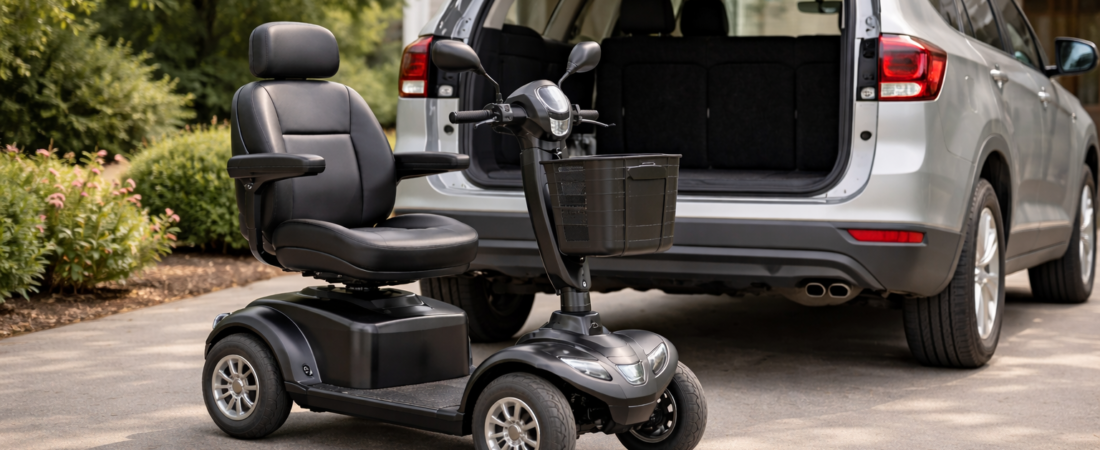
Why Travel, Transport, and Storage Matter
Mobility scooters are not only used at home. Many people need to transport their scooter by car, store it safely between uses, or consider how it fits into everyday travel routines.
Understanding these practical considerations early helps prevent frustration and ensures a scooter integrates smoothly into daily life.
Transporting a Mobility Scooter by Car
Transporting a mobility scooter often depends on its size, weight, and design.
Common transport approaches include:
-
lifting or rolling the scooter into a vehicle
-
using vehicle-mounted carriers
-
transporting the scooter in parts
Not all scooters are equally easy to transport, and these differences can affect how often a scooter is used outside the home.
Vehicle Space and Compatibility
Vehicle size plays a major role in scooter transport.
Important factors include:
-
boot or cargo space dimensions
-
vehicle height and loading access
-
whether seats need to fold or be removed
Understanding how a scooter fits with an existing vehicle avoids unnecessary modifications or limitations later.
Folding and Disassembly Options
Some mobility scooters are designed to fold or disassemble for easier transport.
These designs can:
-
reduce lifting strain
-
improve portability
-
simplify storage
However, folding or disassembly may also involve trade-offs such as added setup time or reduced structural rigidity.
Weight and Lifting Considerations
Scooter weight affects both transport and storage. Heavier scooters may offer more stability but can be harder to move without assistance.
Weight considerations include:
-
lifting capacity of the user or caregiver
-
availability of ramps or lifts
-
frequency of transport
Choosing a scooter with manageable weight supports safer handling and more consistent use.
Storage Space at Home
Storing a mobility scooter requires a safe, accessible space that does not interfere with daily movement.
Common storage locations include:
-
garages
-
covered outdoor areas
-
hallways or utility spaces
Storage needs may influence scooter size, turning ability, and overall practicality.
Indoor Storage and Accessibility
Indoor storage requires attention to:
-
doorway width
-
turning space
-
floor surfaces
A scooter that fits comfortably into storage areas is easier to use regularly and less likely to become an obstacle.
Outdoor Storage and Protection
Outdoor storage may expose a scooter to weather, temperature changes, and environmental wear.
When considering outdoor storage, it’s important to think about:
-
protection from rain and sunlight
-
security
-
ease of access
Durability and maintenance requirements may differ depending on storage conditions.
Transport for Longer Trips
Some users plan to take mobility scooters on longer journeys, including holidays or extended outings.
Longer trips may require:
-
advance planning
-
understanding transport regulations
-
awareness of storage options at destinations
Considering these factors early helps avoid unexpected limitations.
Public Transport and Mobility Scooters
Public transport compatibility varies depending on location, vehicle design, and scooter size.
Key considerations include:
-
space availability
-
weight limits
-
access ramps or lifts
Not all scooters are suitable for all forms of public transport, so understanding these limitations is important.
Balancing Portability and Performance
Scooters designed for easy transport often prioritise portability, while others prioritise comfort or outdoor capability.
Finding the right balance depends on:
-
how often the scooter is transported
-
typical travel distances
-
storage constraints
There is no single solution that suits every situation.
Planning for Everyday Practical Use
Travel, transport, and storage considerations affect how easily a mobility scooter fits into daily routines.
A scooter that is easy to store and transport is more likely to be used consistently, supporting independence without added complexity.
How These Factors Support Long-Term Use
Understanding transport and storage needs helps users choose scooters that remain practical over time.
Thoughtful planning reduces friction and ensures the scooter continues to support mobility as needs and routines evolve.