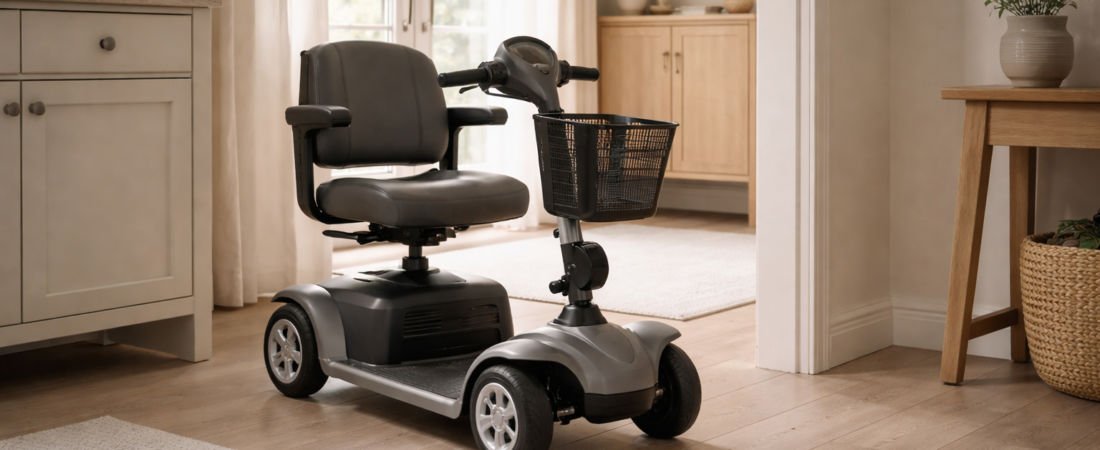
Choosing a mobility scooter for indoor use is less about power or speed, and more about how comfortably and safely it fits into everyday home life. Hallways, doorways, furniture placement, and flooring all place quiet but important limits on what will work well indoors.
This article focuses on the practical factors that genuinely matter inside a home, without assuming any particular brand, model, or purchase decision.
Why Indoor Use Is Different From Outdoor Use
Indoor spaces are controlled environments, but they are also tighter, more cluttered, and less forgiving. Unlike outdoor paths, homes were not designed around mobility scooters.
Common indoor challenges include:
-
Narrow doorways and hallways
-
Tight turns around corners or furniture
-
Changes in flooring between rooms
-
Limited space to stop, park, or turn around
Because of this, the features that matter indoors often have little to do with maximum range or ruggedness, and much more to do with manoeuvrability and proportion.
Turning Radius Matters More Than You Expect
One of the most important indoor considerations is how tightly a scooter can turn.
A large turning radius can make simple movements frustrating:
-
Entering or exiting bathrooms
-
Turning around in bedrooms
-
Navigating kitchens or dining areas
Scooters designed with indoor use in mind usually allow tighter turns, making it easier to reposition without repeated back-and-forth adjustments. This becomes especially noticeable in older homes or apartments with compact layouts.
Overall Width and Length Affect Daily Comfort
Indoor movement is strongly influenced by the physical footprint of the scooter.
Key points to consider:
-
Width affects whether the scooter fits comfortably through doorways
-
Length influences how easily it turns in confined spaces
-
Excess bulk can make rooms feel crowded or restrictive
A scooter that technically fits through a doorway may still feel awkward if it leaves little room for error. Over time, that constant need for precision can increase fatigue and stress.
Low-Speed Control Is More Important Than Top Speed
Inside the home, speed is rarely useful. What matters instead is smooth, predictable control at very low speeds.
Good indoor control allows for:
-
Careful positioning near chairs, beds, or tables
-
Gentle starts and stops
-
Reduced risk of bumping walls or furniture
Scooters that respond too abruptly can feel difficult to manage indoors, even if they perform well outside.
Floor Clearance and Flooring Compatibility
Indoor flooring varies more than many people expect. Homes may include:
-
Carpet
-
Tiles
-
Timber or laminate
-
Thresholds between rooms
Adequate ground clearance helps prevent the scooter from catching on transitions, while appropriate wheel design can reduce resistance on carpeted surfaces. Indoors, smoother operation is usually preferable to rugged traction.
Seat Height and Transfer Ease Indoors
Indoors, getting on and off the scooter often happens multiple times a day. Seat height and stability play a major role in how easy those transfers feel.
Things that matter:
-
A seat height that aligns well with chairs or beds
-
Stable positioning during transfers
-
Enough space to approach seating areas comfortably
If transfers feel awkward or rushed, indoor use can become tiring even if the scooter itself performs well.
Storage and Parking Inside the Home
Where a scooter lives when it is not being used is an often-overlooked factor.
Indoor-friendly scooters tend to:
-
Fit neatly along walls or in corners
-
Avoid blocking walkways or doors
-
Be easy to park without complex manoeuvres
This is especially important in shared living spaces where other household members are moving around.
Noise and Vibration in Quiet Spaces
Indoors, sound and vibration are more noticeable. Quiet operation can make a significant difference to comfort, particularly in the evening or early morning.
Subtle considerations include:
-
Motor noise at low speeds
-
Vibration through flooring
-
Smoothness when starting or stopping
Over time, these small details can influence how pleasant indoor use feels.
Indoor Use Often Means Indoor Priorities
A mobility scooter that works beautifully outdoors may feel cumbersome indoors. Indoor use tends to reward:
-
Compact dimensions
-
Tight turning ability
-
Predictable low-speed handling
-
Ease of transfers and parking
Understanding these priorities helps avoid choosing a scooter that feels oversized or awkward inside the home.
Indoor use is just one part of a larger decision, and these factors tend to matter most when choosing the right mobility scooter for everyday life rather than occasional use.
Finding the Right Balance for Your Space
Many people weighing indoor use also find it helpful to understand the broader differences between indoor vs outdoor mobility scooters, especially when deciding how much manoeuvrability to prioritise inside the home.
Thinking carefully about how the scooter will be used inside the home can prevent frustration later. Even small differences in size or control can have a noticeable impact on daily comfort and confidence.
For a broader framework on weighing these trade-offs, you may find it helpful to revisit how different scooter characteristics are evaluated when choosing the right mobility scooter overall.
Indoor use is not about having the most powerful scooter. It is about having one that fits quietly and reliably into everyday life.