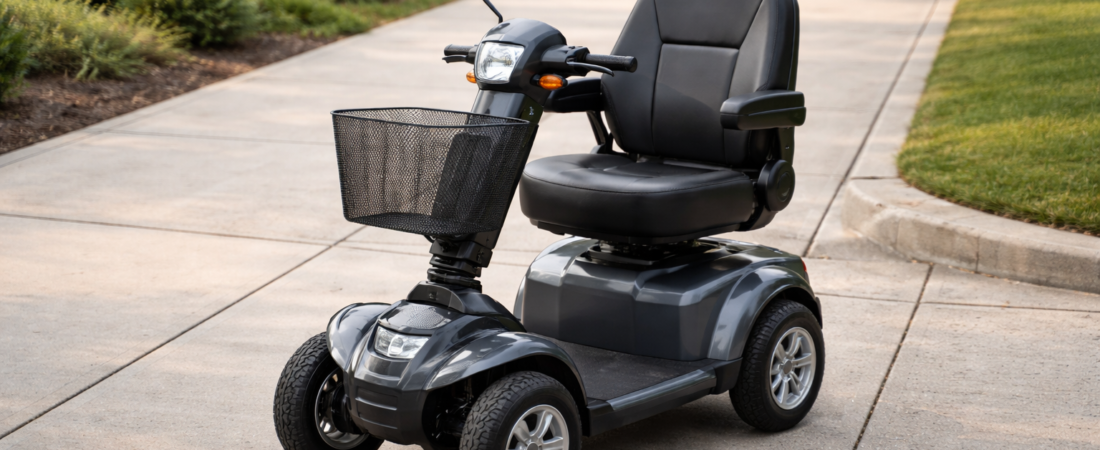
Outdoor footpaths and pavements are where many mobility scooters are used most often. Local shops, medical appointments, parks, and visiting friends typically involve travelling on concrete sidewalks, shared paths, and kerb ramps rather than perfectly smooth indoor flooring.
Not all scooters handle these surfaces equally well. Small design differences can significantly affect comfort, stability, and confidence outdoors.
If you’re still deciding where your scooter will be used most often, it can help to understand the broader differences in Indoor vs Outdoor Mobility Scooters: Key Differences.
This guide explains what actually matters when choosing a mobility scooter for everyday footpath and pavement use.
What Outdoor Pavement Use Really Involves
Footpaths may look smooth at first glance, but they usually include:
• Small cracks and expansion joints
• Slight slopes for drainage
• Kerb ramps and driveway crossings
• Rough or uneven concrete sections
• Brick or paver paths
A scooter designed only for indoor or ultra-smooth surfaces may feel unstable or uncomfortable on these textures. The goal for pavement use is steady tracking, good ground clearance, and comfortable shock absorption rather than high speed.
4-Wheel vs 3-Wheel Scooters for Pavements
For most outdoor footpath use, 4-wheel scooters offer greater stability.
A four-wheel layout provides:
• Better balance on uneven concrete
• More confidence on sloped footpaths
• Improved stability when crossing kerb ramps
• Reduced tipping risk on minor surface changes
Three-wheel scooters can still work outdoors, particularly on smooth shared paths, but they are generally better suited to indoor manoeuvring and tight spaces.
If outdoor use is the primary goal, a 4-wheel configuration is usually the safer and more confidence-inspiring choice.
Tyre Type: Why It Matters More Than Speed
Tyres influence comfort and traction more than many people realise.
Common options include:
Solid (Non-Pneumatic) Tyres
• Low maintenance
• No punctures
• Firmer ride
These are practical but can feel harsher over cracks and joints.
Pneumatic (Air-Filled) Tyres
• Better shock absorption
• Smoother ride on uneven surfaces
• Improved grip on textured pavement
For regular pavement travel, pneumatic tyres generally provide greater comfort, especially over longer distances.
Ground Clearance and Kerb Ramps
Ground clearance refers to the space between the lowest part of the scooter and the ground.
Higher ground clearance helps when:
• Crossing driveway lips
• Navigating kerb ramps
• Travelling over slightly raised concrete edges
Very low-clearance scooters may scrape or feel unstable on small elevation changes.
For everyday pavement use, moderate ground clearance provides added reassurance without making the scooter feel oversized.
Suspension and Ride Comfort
Some scooters include built-in suspension systems that absorb minor bumps and vibration.
While suspension is not essential for short, smooth pavement trips, it can significantly improve comfort if:
• You travel longer distances
• Your local footpaths are uneven
• You experience back or joint discomfort
Even basic front or rear suspension can reduce vibration fatigue over time.
Turning Radius and Footpath Navigation
Outdoor pavements often require:
• Turning at intersections
• Navigating around street furniture
• Adjusting around pedestrians
A scooter with a balanced turning radius allows for smooth directional changes without feeling unstable.
Extremely large “road-style” scooters may feel bulky on standard suburban sidewalks. For most pavement users, a mid-sized scooter provides a good balance between stability and manoeuvrability.
Battery Range for Local Travel
Footpath travel typically involves short to moderate distances.
Consider:
• Distance to local shops
• Return travel without recharging
• Slight battery drain from slopes
A realistic battery range that comfortably exceeds your usual trip distance provides peace of mind. There is no need to prioritise maximum range unless you regularly travel several kilometres at a time.
Weight and Portability Considerations
Some pavement users also transport their scooter by car.
If that applies to you, balance outdoor stability with transport practicality. Larger, heavier scooters may feel excellent on pavements but can be more difficult to lift or disassemble.
If vehicle transport is important, you may also find it helpful to read Choosing a Mobility Scooter That Fits in Your Car Boot.
Safety and Visibility Outdoors
When travelling on public footpaths, visibility matters.
Look for:
• Reflectors or front and rear lighting
• A comfortable horn control
• Clear, easy-to-use speed settings
Being visible and predictable helps you share footpaths safely with pedestrians and cyclists.
What “Best” Really Means for Pavement Use
The best mobility scooter for outdoor footpaths is not the fastest or the largest.
It is the one that provides:
• Stable four-wheel balance
• Comfortable tyre cushioning
• Moderate ground clearance
• Predictable steering
• Sufficient battery range for your routine
For users who primarily travel locally on suburban pavements, a mid-sized 4-wheel scooter with pneumatic tyres often offers the most practical balance of stability and comfort.
If you’re comparing broader categories before narrowing down specific models, you may also want to review Types of Mobility Scooters Explained: Travel, Mid-Size, and Heavy-Duty to better understand how different scooter classes relate to outdoor use.
Choosing carefully now helps ensure that everyday pavement travel feels smooth, steady, and confidence-building rather than tiring or unstable.