Mobility scooters are designed to provide steady, reliable support. When properly maintained, they can offer years of safe daily use. However, like any mechanical device, wear and tear can gradually reduce stability, braking reliability, or overall control.
Recognising early warning signs helps prevent small issues from becoming safety risks. Many problems develop slowly and can be corrected before they affect independence.
This guide explains the practical signs that a mobility scooter may be becoming unsafe, and what those signs usually mean.
Changes in Stability or Balance
A scooter that once felt steady may begin to feel slightly unstable.
Common warning signs include:
-
A new wobble when turning
-
Increased body roll when cornering
-
The scooter leaning slightly to one side
-
A feeling of looseness in the steering column
These changes may result from worn tyres, loose steering components, suspension wear, or uneven tyre pressure. Stability changes should never be ignored, especially if they affect confidence during normal use.
If you are unsure what “normal” stability should feel like, it can help to review the key design elements discussed in Mobility Scooter Safety, Stability & Comfort Features, which explains how weight distribution, wheelbase, and suspension influence balance.
Reduced Braking Performance
Brakes should feel predictable and responsive.
Possible warning signs include:
-
Longer stopping distances
-
Jerky or uneven stopping
-
Grinding or unusual noises when slowing
-
A delay between releasing the throttle and slowing down
Even subtle changes in braking response deserve attention. Braking systems can wear gradually, and battery voltage issues may also affect electronic braking performance.
If stopping distance begins to increase, the scooter should be inspected before further use in busy environments.
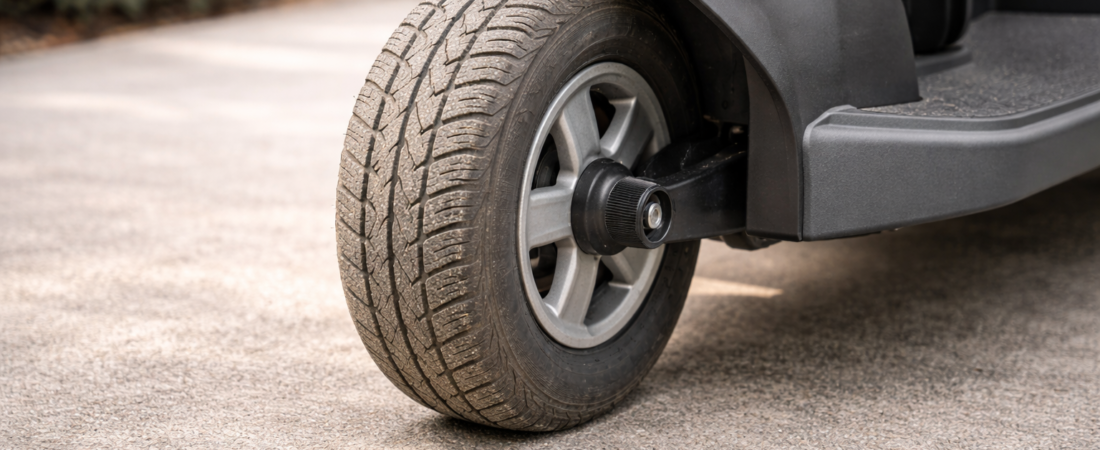
Worn or Damaged Tyres
Tyres play a significant role in grip and shock absorption.
Look for:
-
Flattened tread
-
Visible cracks in rubber
-
Bald patches
-
Uneven wear on one side
-
Reduced traction on slopes or damp pavement
Tyres that appear intact may still lose elasticity over time, particularly if the scooter is stored outdoors or exposed to temperature extremes.
Reduced tyre grip increases the risk of sliding during turns or when travelling over uneven surfaces.
Battery Decline and Electrical Irregularities
Battery performance affects more than travel distance.
Warning signs of battery or electrical decline include:
-
Noticeably reduced range
-
Power dropping suddenly under load
-
Dimming lights
-
Inconsistent speed
-
Error lights appearing intermittently
Older batteries may struggle to maintain stable voltage, especially when climbing ramps or carrying heavier loads. Electrical irregularities can also affect braking systems and control responsiveness.
If the scooter hesitates, surges, or loses power unexpectedly, it should be evaluated before regular use continues.
Steering or Control Sensitivity Changes
Controls should feel consistent.
Potential warning signs:
-
Throttle feels stiff or overly sensitive
-
Delayed acceleration after pressing the lever
-
Scooter pulls slightly to one side
-
Increased vibration in the handlebars
Steering alignment or worn internal components can create subtle directional drift. Over time, this can increase fatigue and reduce precision in tight indoor spaces.
Seat and Structural Wear
Comfort and safety are closely connected.
Look for:
-
Cracks in the seat base
-
Excessive cushion compression
-
Loose seat posts
-
Wobble when sitting down
-
Armrests that move more than they should
A compromised seating position can shift weight distribution and reduce stability, particularly when turning or navigating ramps.
If the frame or chassis shows visible cracks, corrosion, or bending, the scooter should not be used until assessed.
Unusual Noises
New sounds often signal developing mechanical issues.
Common examples:
-
Clicking during acceleration
-
Grinding while turning
-
Rattling over minor bumps
-
High-pitched motor noises
While some operational noise is normal, sudden changes deserve attention. Many mechanical problems are easier and less costly to fix when addressed early.
Frequent Repairs or Increasing Maintenance Needs
Occasional maintenance is expected. However, repeated issues may indicate deeper wear.
Signs include:
-
Recurrent electrical faults
-
Repeated tyre replacements
-
Brake adjustments needed more frequently
-
Components loosening shortly after tightening
At a certain point, reliability becomes unpredictable. When maintenance frequency increases noticeably, it may be time to evaluate whether repair remains practical.
Loss of Confidence While Using the Scooter
One of the most important indicators is personal confidence.
If you begin to:
-
Avoid certain routes
-
Feel uncertain on mild slopes
-
Slow down excessively out of concern
-
Worry about stopping distance
The scooter may no longer be performing at its previous level.
Confidence changes often occur before obvious mechanical failure. Paying attention to these subtle signals can prevent incidents.
When to Seek Inspection
A professional service inspection is advisable when:
-
Stability changes are noticeable
-
Braking response shifts
-
Electrical irregularities occur
-
Structural wear is visible
Even if the issue seems minor, a safety check can restore reassurance and extend the scooter’s usable life.
If you are unsure whether your scooter’s current behaviour reflects normal aging or a safety concern, reviewing the broader safety principles in Mobility Scooter Safety, Stability & Comfort Features can help clarify what stable, well-functioning performance should feel like.
A Gradual Process, Not Sudden Failure
Most mobility scooters do not become unsafe overnight. Wear typically develops gradually. Small changes accumulate until they affect handling, braking, or stability.
Routine inspection, attention to subtle performance changes, and timely servicing help preserve independence and reduce risk.
Safety is not only about avoiding breakdowns. It is about maintaining predictable, stable, and confident movement in everyday life.