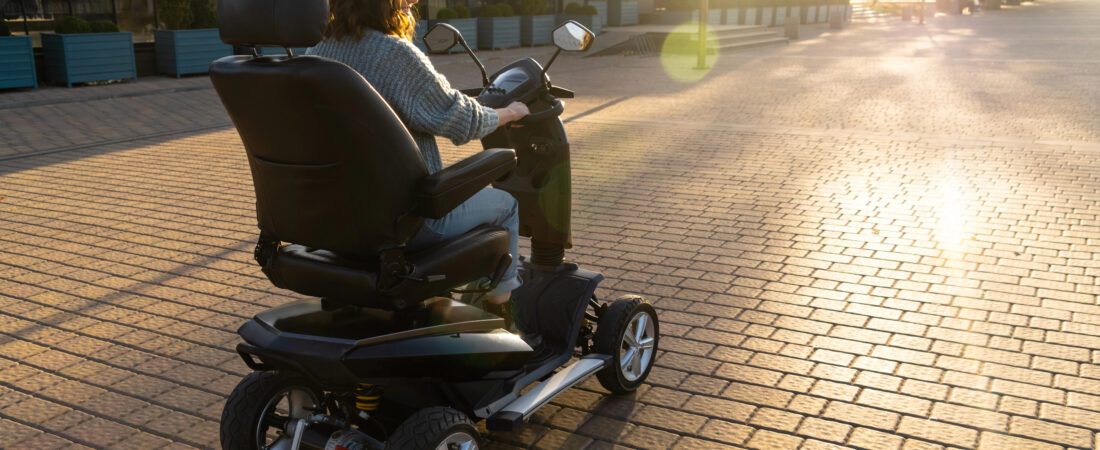
Mobility scooters are designed to help people maintain independence, confidence, and freedom of movement as walking becomes more difficult. However, not all mobility scooters are the same. Different designs suit different environments, body types, mobility needs, and lifestyles.
Understanding the main types of mobility scooters is the first step toward choosing one that genuinely fits your daily life, rather than ending up with something that is uncomfortable, impractical, or difficult to use.
This guide explains the core categories of mobility scooters, how they differ, and who each type is best suited for.
Mobility scooters are not one-size-fits-all. The right scooter depends on factors such as where it will be used most, how much space is available at home, body weight and comfort needs, transport and storage requirements, and balance, strength, and confidence levels.
Choosing the wrong type can lead to problems such as poor maneuverability, discomfort, limited range, or difficulty using the scooter safely. Understanding the main categories helps narrow options before comparing individual models.
3-Wheel Mobility Scooters
3-wheel mobility scooters use a single wheel at the front and two wheels at the rear. This design allows for a tighter turning radius than most 4-wheel models.
Key characteristics include excellent maneuverability in tight spaces, a narrower overall width, and a lighter frame compared to larger scooters.
They are best suited for indoor use, apartments and smaller homes, and shopping centres or smooth indoor flooring.
Because they have one front wheel, 3-wheel scooters may feel less stable on uneven outdoor surfaces or rough footpaths. They are generally better suited to controlled environments rather than long outdoor trips.
4-Wheel Mobility Scooters
4-wheel mobility scooters feature two wheels at the front and two at the rear, providing a wider and more stable base.
They offer improved stability and balance, better handling on outdoor surfaces, and greater confidence on slopes and uneven ground.
They are well suited for outdoor use, suburban footpaths and community areas, and users who prioritise stability over tight turning.
The wider turning radius can make 4-wheel scooters less practical in narrow hallways or small rooms, especially in older homes.
Travel and Portable Mobility Scooters
Travel scooters are designed to be lightweight and easy to transport. Many can be folded or dismantled into smaller components.
They typically feature lightweight construction, easy loading into a car boot, and simple assembly and disassembly.
They are best for occasional use, travel, holidays, and outings, particularly for users who need portability more than long range or high power.
Because of their compact design, travel scooters usually have shorter battery range and smaller seats. They are not intended for rough terrain or extended outdoor distances.
Mid-Size Mobility Scooters
Mid-size scooters balance indoor maneuverability with outdoor capability and are often the most versatile option.
They usually have moderate size and weight, comfortable seating, and better battery range than travel scooters.
They are suitable for mixed indoor and outdoor use, daily errands, and local outings, especially for users who want one scooter to handle most situations.
They do require more storage space than portable models and may be harder to transport without a suitable vehicle.
Heavy-Duty and Outdoor Mobility Scooters
Heavy-duty scooters are built for maximum comfort, power, and range and are typically the largest and most robust category.
They offer higher weight capacity, longer battery range, and larger wheels with suspension systems for outdoor use.
These scooters are ideal for regular outdoor use, longer distances, and users who need extra support and comfort.
Due to their size, they are not practical for indoor use. Storage and transport also require more planning and space.
Compact and Indoor-Focused Mobility Scooters
Some scooters are specifically designed for indoor environments, prioritising tight turning and compact dimensions.
They feature a very small footprint, tight turning radius, and lower top speeds.
They work best for indoor-only use, assisted living facilities, and homes with narrow hallways or doorways.
They are not suitable for outdoor footpaths or uneven surfaces and usually have limited range.
Matching Scooter Type to Real-World Needs
Rather than focusing on features alone, it helps to think about how and where the scooter will actually be used.
Indoor-focused use generally suits 3-wheel or compact scooters. Outdoor and footpath use is better matched with 4-wheel or heavy-duty scooters. Occasional trips and transport favour travel scooters, while those seeking a single all-round solution often prefer mid-size models.
Choosing based on lifestyle rather than specifications often leads to better long-term satisfaction.
What This Means Going Forward
Understanding the different types of mobility scooters makes it easier to compare individual models realistically, avoid overbuying or underbuying, and focus on comfort, safety, and usability rather than marketing claims.
In the next supporting articles, we will explore indoor versus outdoor use, turning radius, comfort features, and how to choose the right scooter for specific mobility needs.